Sleepmaxxing: What the TikTok Trend Gets Right, What It Gets Wrong, and a Better Protocol
Key Takeaways
Sleepmaxxing — the practice of stacking multiple sleep optimization techniques — gets several things right (temperature regulation, consistent schedules, morning sunlight, magnesium glycinate) but also promotes some practices with insufficient evidence or genuine risks (mouth taping without a sleep study, excessive supplement stacking, obsessive tracking). The most dangerous aspect of sleepmaxxing is "orthosomnia" — anxiety about sleep data that paradoxically worsens sleep quality. The most effective sleep protocol is simpler than TikTok suggests: anchor your circadian rhythm, optimize your environment, manage your nervous system, and stop treating sleep like a performance metric.
If your TikTok feed looks anything like most people's in 2026, you've seen the sleepmaxxing videos. Someone in a pitch-dark room with mouth tape, blue-light glasses, a cooling mattress pad, a stack of supplements (magnesium, glycine, L-theanine, apigenin, tart cherry extract), and a sleep tracker ready to score their performance.
The hashtag has billions of views. The premise is appealing: sleep is the foundation of health, so why not optimize every variable? Stack the interventions. Hack the system. Max out your sleep score.
Some of this advice is excellent. Some of it is unsubstantiated. Some of it is actively counterproductive. And the meta-problem — treating sleep like a competitive optimization challenge — might be the biggest issue of all.
Let's sort the signal from the noise.
What Sleepmaxxing Gets Right
Credit where it's due: the sleepmaxxing movement has done more to raise awareness about sleep quality than decades of public health campaigns. And several of its core recommendations are solidly backed by research.
1. Temperature Control
This is arguably the most impactful sleep intervention that most people overlook. Your core body temperature needs to drop by approximately 1-2 degrees Fahrenheit (0.5-1 degree Celsius) to initiate and maintain sleep. Research by Dr. Matthew Walker at the University of California, Berkeley has established temperature as a primary driver of sleep onset and sleep architecture.
Sleepmaxxers recommend cooling mattress pads, cold showers before bed, and keeping bedrooms at 65-68°F (18-20°C). The science supports all of this. A study published in the journal Sleep Medicine Reviews found that ambient temperature manipulation was one of the most effective non-pharmacological sleep interventions, with cooling environments consistently improving both sleep onset latency and deep sleep duration.
Verdict: Evidence-backed. Do this.
2. Consistent Sleep Schedule
Going to bed and waking up at the same time every day — including weekends — is the single most important thing you can do for your circadian rhythm. Research has consistently shown that irregular sleep schedules are associated with worse metabolic health, increased cardiovascular risk, and poorer sleep quality than consistently short sleep.
A study at Harvard Medical School found that every hour of variation in sleep schedule increased the risk of metabolic syndrome by 27%. Your body clock doesn't understand weekends.
Sleepmaxxers are emphatic about this, and they're right.
Verdict: Evidence-backed. Non-negotiable.
3. Morning Sunlight Exposure
Getting bright natural light in your eyes within the first 30-60 minutes of waking is one of the most well-established circadian interventions in sleep science. Morning sunlight triggers a cortisol pulse that sets your biological clock's "start" timer, which in turn determines when melatonin production begins approximately 14-16 hours later.
Dr. Andrew Huberman's popularization of this research brought morning sunlight protocols to mainstream awareness, and the underlying science from chronobiology researchers like Dr. Charles Czeisler at Harvard is robust. Even 10 minutes of outdoor light exposure (overcast days still provide 10,000+ lux, far more than indoor lighting) meaningfully improves circadian timing.
Verdict: Evidence-backed. One of the most effective free interventions.
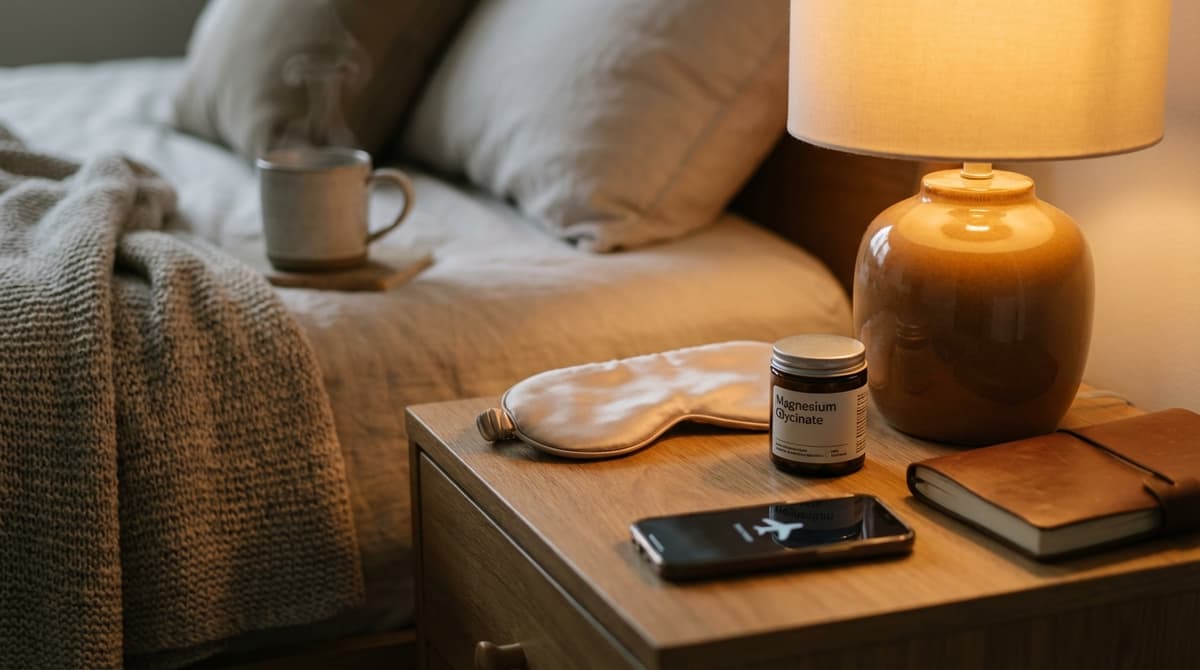
4. Magnesium Supplementation
Of all the supplements in the sleepmaxxer's arsenal, magnesium has the strongest evidence base. Magnesium plays a role in over 300 enzymatic processes in the body, including the regulation of GABA (the brain's primary inhibitory neurotransmitter) and the deactivation of the sympathetic nervous system.
Research published in the Journal of Research in Medical Sciences found that magnesium supplementation significantly improved sleep quality in older adults with insomnia, reducing sleep onset latency and increasing sleep time. A systematic review in the journal Nutrients confirmed that magnesium supplementation appears to improve subjective measures of sleep quality, particularly in populations with low magnesium intake (which, given modern diets, includes a substantial portion of the population).
The key detail: form matters. Magnesium glycinate and magnesium threonate are the forms most associated with sleep benefits, as they cross the blood-brain barrier more effectively. Magnesium oxide (the cheapest and most common form) has poor bioavailability and is more likely to cause GI distress than relaxation.
Verdict: Evidence-backed, with caveats about form. Magnesium glycinate 200-400mg is well-supported.
5. Light Blocking in the Evening
Exposure to bright light — particularly blue-spectrum light from screens — after sunset suppresses melatonin production and delays circadian timing. Research from Brigham and Women's Hospital found that reading from a light-emitting device before bed shifted the circadian clock by 1.5 hours and suppressed melatonin by over 50%.
Sleepmaxxers recommend blue-light-blocking glasses, screen-dimming software, and switching to warm, dim lighting in the 2-3 hours before bed. All of this is consistent with the research. The most effective approach is reducing overall light exposure in the evening, not just blue light — research suggests that even warm-toned light at high intensity can suppress melatonin.
Verdict: Evidence-backed, though total light reduction matters more than just blue-light filtering.
What Sleepmaxxing Gets Wrong (or Overhypes)
1. Mouth Taping
This is perhaps the most controversial sleepmaxxing practice. The idea is that taping your mouth shut during sleep forces nasal breathing, which proponents claim improves sleep quality, reduces snoring, and prevents dry mouth.
There is legitimate research supporting the benefits of nasal breathing during sleep. A study in the journal Neuroreport found that nasal breathing activates the parasympathetic nervous system more effectively than oral breathing. And nasal breathing filters, warms, and humidifies air more effectively than mouth breathing.
However — and this is critical — mouth taping without a prior sleep study is potentially dangerous. If you have undiagnosed obstructive sleep apnea (which affects an estimated 80% of moderate-to-severe cases that remain undiagnosed, according to the American Academy of Sleep Medicine), taping your mouth shut removes a backup airway during events where your primary nasal passage may already be compromised.
Dr. Raj Dasgupta, a pulmonologist and sleep specialist at USC, has explicitly warned against mouth taping without medical evaluation, noting that it can mask or worsen sleep-disordered breathing.
Verdict: The nasal breathing principle has merit, but mouth taping without a sleep study carries real risk. Get evaluated first.
2. Supplement Stacking
The typical sleepmaxxer protocol includes 5-8 supplements: magnesium, glycine, L-theanine, apigenin (chamomile extract), tart cherry extract, ashwagandha, GABA, and sometimes melatonin.
While individual supplements have varying levels of evidence (magnesium: strong; glycine: moderate; L-theanine: moderate; apigenin: limited; tart cherry: limited), the practice of stacking multiple supplements simultaneously has essentially no research supporting it. We don't know how these compounds interact in combination. We don't know if the effects are additive, redundant, or counteractive.
More importantly, if you're taking seven supplements and your sleep improves, you have no idea which one (or which combination) is responsible. This makes it impossible to optimize, and you end up spending $50-100/month on a stack where most of the components may be doing nothing.
Verdict: One or two evidence-backed supplements (magnesium glycinate, possibly glycine or L-theanine) are reasonable. A seven-supplement stack is unproven and potentially wasteful.
3. Melatonin as a Nightly Sleep Aid
Melatonin is the most widely used sleep supplement, and it's also the most widely misunderstood. Melatonin is a chronobiotic — it shifts circadian timing — not a sedative. It signals to your brain that darkness has arrived, which helps regulate the timing of sleep onset.
Research supports melatonin for jet lag, shift work adjustment, and certain circadian rhythm disorders. But the evidence for melatonin as a general sleep aid for people with normal circadian rhythms is weak. A meta-analysis in the journal PLOS ONE found that melatonin reduced sleep onset latency by an average of only 3.9 minutes and increased total sleep time by only 13.7 minutes — effects that are statistically significant but clinically minimal.
Additionally, most over-the-counter melatonin is drastically overdosed. The physiologically appropriate dose is 0.3-0.5mg. Most products contain 3-10mg — 10 to 30 times the effective dose — which can actually disrupt the circadian rhythm rather than support it, and may suppress natural melatonin production over time.
Verdict: Useful for jet lag and circadian disorders. Not a general sleep aid. If you use it, 0.3-0.5mg is the supported dose.
4. Obsessive Sleep Tracking
And now we arrive at what may be the sleepmaxxing movement's most insidious contribution: the belief that sleep must be measured, scored, and optimized with data.
Sleep trackers (Oura Ring, Apple Watch, Whoop, Eight Sleep) are marketed as tools for improvement. But research from Rush University Medical Center identified a condition they named orthosomnia — a clinical-level sleep disturbance caused by anxiety about sleep tracker data.
Patients were showing up at sleep clinics not because they couldn't sleep, but because their tracker told them they weren't sleeping well enough. The anxiety about the data — checking scores first thing in the morning, worrying about whether tonight's score would be lower, adjusting behavior based on imprecise consumer-grade metrics — was itself disrupting sleep.
A study published in the Journal of Clinical Sleep Medicine found that participants who focused on their sleep tracker data showed increased pre-sleep anxiety and worse subjective sleep quality compared to participants who didn't track. The irony is perfect: the tool meant to improve sleep was making sleep worse.
Consumer sleep trackers are also significantly less accurate than clinical polysomnography. Research published in Nature and Science of Sleep found that wrist-worn trackers overestimate sleep duration, misclassify sleep stages (particularly REM and deep sleep), and provide data that varies substantially between devices. Using this imprecise data to make supplement or behavioral decisions is like using a bathroom scale that's off by 15 pounds to calibrate your diet.
Verdict: Sleep trackers can identify gross patterns (like whether your sleep schedule is consistent), but obsessing over nightly scores is counterproductive. If checking your sleep data causes anxiety, stop checking.
The Orthosomnia Paradox
This is worth dwelling on because it captures the fundamental tension of the sleepmaxxing philosophy.
Sleep is a paradoxical state. It requires surrender, not effort. It requires you to let go of control, not exert more of it. Every technique in the sleepmaxxer's toolkit — the supplements, the temperature hacks, the tracking, the rigid protocols — is an attempt to control an inherently uncontrollable process.
And up to a point, this works. Setting up your environment (cool room, dark room, consistent schedule) removes obstacles to sleep. But beyond that point, additional optimization efforts become a form of hypervigilance that is itself antithetical to sleep.
The sleep researcher Dr. Guy Meadows, founder of The Sleep School in London, describes this as the "sleep effort paradox": the more effort you put into trying to sleep, the more aroused your nervous system becomes, and the harder sleep becomes. His Acceptance and Commitment Therapy-based approach to insomnia teaches patients to accept sleeplessness rather than fight it — and the results consistently outperform traditional sleep hygiene education.
The healthiest relationship with sleep isn't obsessive optimization. It's setting up good conditions and then trusting your body to do what it's been doing for 300 million years of mammalian evolution.
A Clean, Evidence-Backed Sleep Protocol
Here's what the research actually supports, stripped of hype and organized by impact:
Tier 1: Non-Negotiable Foundations (Do These First)
Consistent schedule. Same wake time every day, including weekends. Your bedtime can vary slightly, but your wake time should not. This is the anchor for everything else.
Morning sunlight. 10-30 minutes of outdoor light within 60 minutes of waking. No sunglasses. Overcast days still count. This sets your circadian clock for the day and determines when you'll feel sleepy 14-16 hours later.
Cool bedroom. 65-68°F (18-20°C). If you can't control room temperature, a hot shower 90 minutes before bed triggers a reactive core temperature drop that mimics the same effect. Research published in Sleep Medicine Reviews found this "warm bath effect" reliably improved sleep onset.
Evening light reduction. Dim lights 2 hours before bed. Limit screens or use night mode. The goal is to not suppress melatonin production.
Tier 2: Evidence-Based Additions
Magnesium glycinate. 200-400mg, 30-60 minutes before bed. One of the few supplements with consistent evidence for sleep improvement.
Caffeine curfew. No caffeine after noon (or at least 8 hours before bed). Caffeine has a half-life of 5-6 hours, meaning that half of your afternoon coffee is still circulating in your bloodstream at midnight. Research by Dr. Christopher Drake at Henry Ford Hospital found that caffeine consumed even 6 hours before bed significantly reduced sleep quality.
Regular exercise. Moderate aerobic exercise improves sleep quality — but timing matters. A meta-analysis in the European Journal of Sport Science found that exercise completed more than 2 hours before bed improved sleep onset and duration, while intense exercise within 1-2 hours of bed impaired sleep in some individuals.
Tier 3: If You Want to Go Further
Glycine. 3g before bed. Several studies show improvements in subjective sleep quality and next-day alertness, possibly through temperature regulation.
Nasal breathing practice. If you're a chronic mouth breather, work with a dentist or ENT to address the root cause (deviated septum, allergies, enlarged turbinates) rather than taping your mouth.
Journaling. Writing a to-do list or worry dump 15-20 minutes before bed reduces sleep onset latency. A study at Baylor University found that writing a specific to-do list (not just journaling) reduced the time to fall asleep by an average of 9 minutes — more than most pharmaceutical interventions.
What to Skip
- Supplement stacks of more than 2-3 compounds
- Melatonin above 0.5mg (unless directed by a physician for circadian disorders)
- Mouth taping without a sleep study
- Obsessive sleep tracking
- Rigidity that creates anxiety (if one "imperfect" night derails your mental health, the protocol is working against you)
The Nervous System Component
Here's what the sleepmaxxing trend fundamentally misses: the number one predictor of poor sleep is an activated nervous system. You can optimize every environmental variable and take every supplement, but if your sympathetic nervous system is firing — if you're stressed, anxious, vigilant, or wound up — none of it matters.
Research from Stanford's Sleep Medicine Center has shown that pre-sleep arousal (mental and physiological activation at bedtime) is the strongest predictor of insomnia, outweighing all environmental and behavioral factors combined.
This is why the most effective sleep interventions are often not about sleep at all. They're about stress management, anxiety reduction, emotional processing, and nervous system regulation during the day. If you lower your baseline arousal level, sleep often improves dramatically without any additional "hacks."
A 10-minute body scan or guided visualization before bed activates the parasympathetic nervous system, reduces cortisol, and creates the conditions for sleep onset more reliably than any supplement stack. The irony of sleepmaxxing is that the most powerful tool for better sleep isn't something you buy — it's something you practice.
The Vibrae Approach
Vibrae's bedtime sessions are designed to do exactly what the sleepmaxxing protocol misses: calm the nervous system. Each session uses personalized visualization and guided body awareness to shift you from sympathetic activation to parasympathetic rest — the state your body needs to be in for sleep to happen naturally.
Because the best sleep protocol isn't about stacking more interventions. It's about creating the conditions where your body remembers what it already knows how to do.
Related Reading
- Why You Always Wake Up at 3 AM (And How to Stop) — The cortisol and melatonin dynamics behind middle-of-the-night insomnia.
- You're Always Tired Even Though You Slept — Why 8 hours of sleep doesn't always mean 8 hours of rest.
- What Actually Lowers Cortisol — Evidence-based stress reduction that improves sleep as a side effect.
Continue Reading
Why You Always Wake Up at 3 AM (And How to Stop)
That 3 AM wake-up isn't random. Here's the science behind middle-of-the-night insomnia and what actually helps you sleep through.
Why You're Always Tired Even When You Sleep Enough (The Hidden Exhaustion Epidemic)
You're getting 7-8 hours. You're still exhausted. The problem isn't how much you sleep — it's what's happening while you're sleeping.