Why You're Always Tired Even When You Sleep Enough (The Hidden Exhaustion Epidemic)
Key Takeaways
Sleeping 7-8 hours means nothing if the quality of those hours is compromised. Chronic tiredness despite adequate sleep duration is usually caused by disrupted sleep architecture (not enough deep sleep or REM), cortisol timing issues (stress hormones active during rest), a nervous system that never fully shifts into recovery mode, emotional exhaustion masquerading as physical fatigue, or circadian rhythm misalignment. The fix isn't more sleep — it's better sleep, which requires addressing the underlying causes of sleep quality degradation.
Bottom line: If you sleep enough hours but still feel exhausted, the problem is sleep quality — not quantity — and fixing it starts with your nervous system and stress levels.
---
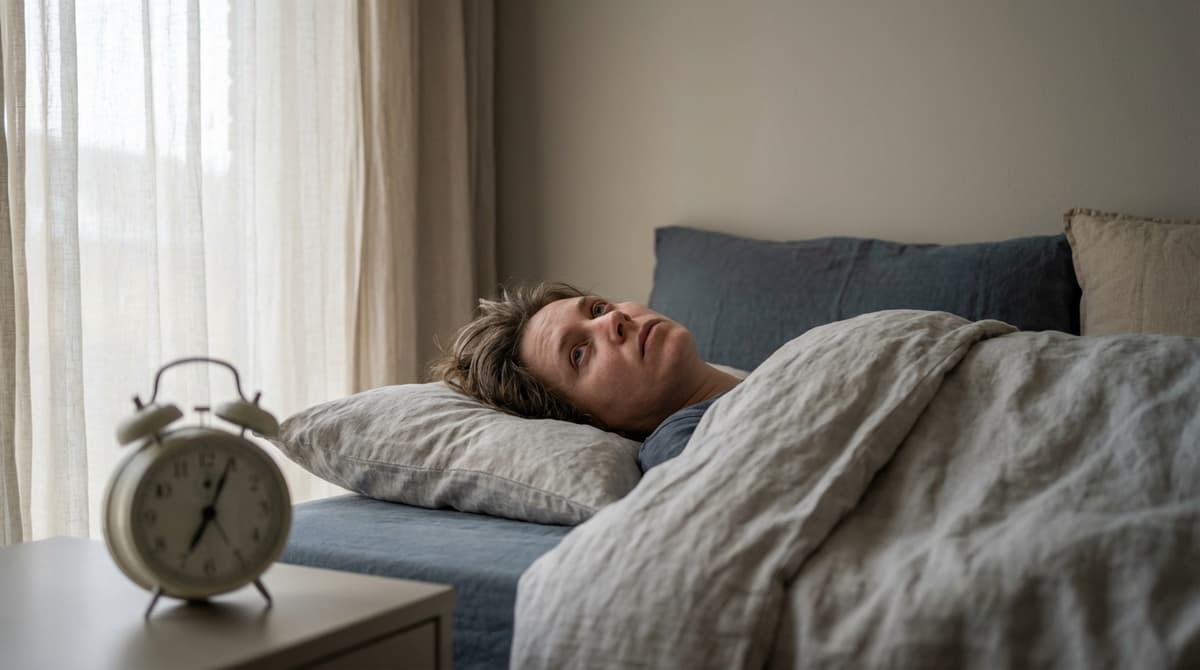
You went to bed at 10:30. You fell asleep reasonably quickly. Your alarm went off at 6:30. That's eight hours. By every standard metric, you should feel rested.
Instead, you feel like you barely slept at all. Your eyes are heavy. Your brain is foggy. Your body moves through the morning like it's dragging weight. By 2 PM, you're fantasizing about a nap. By evening, you're somehow both exhausted and unable to go to sleep early.
So you Google it. Every article says the same thing: "Are you really getting enough sleep?" Yes. You are. And you're still exhausted.
This is one of the most common and most frustrating health experiences people face — chronic fatigue that doesn't respond to more sleep. It's so prevalent that researchers have started calling it the "hidden exhaustion epidemic," a pattern that affects millions of people who look healthy, sleep adequate hours, and have no diagnosable sleep disorder, but who live in a perpetual state of tiredness that no amount of rest seems to resolve.
The problem isn't how long you sleep. It's what's happening — or not happening — while you're sleeping.
Sleep Quantity vs. Sleep Quality: The Distinction That Changes Everything
We've been conditioned to think about sleep as a single number: 7 hours, 8 hours, 9 hours. As if the only variable that matters is duration.
But sleep isn't a monolithic state. It's a dynamic, multi-stage process, and the quality of each stage determines how rested you feel when you wake up.
A complete sleep cycle lasts approximately 90 minutes and moves through four stages:
Stage 1 (N1): Light sleep. The transition from wakefulness. Lasts a few minutes. Easy to wake from. Not restorative.
Stage 2 (N2): Moderate sleep. Heart rate slows, body temperature drops. This stage dominates total sleep time (about 50%). It's involved in memory consolidation and motor learning.
Stage 3 (N3/Slow-Wave Sleep): Deep sleep. This is the physically restorative stage. Human growth hormone is released. Tissues repair. The immune system strengthens. The brain clears metabolic waste through the glymphatic system. This stage is concentrated in the first half of the night.
REM Sleep: Dream sleep. This is the mentally and emotionally restorative stage. The brain processes emotions, consolidates declarative memories, and integrates learning. REM periods get longer as the night progresses, with the longest and most important REM cycles occurring in the last 2-3 hours of sleep.
Here's the critical insight: you can sleep 8 hours and still be deficient in deep sleep or REM. If disturbances are fragmenting your sleep cycles — pulling you from deep sleep into lighter stages without waking you fully — you lose the restorative phases while technically "sleeping" the right number of hours.
Research published in the journal Sleep found that sleep fragmentation (frequent arousals that shift you from deeper to lighter sleep stages) predicted daytime fatigue more strongly than total sleep duration. Participants who slept 7 hours with intact sleep architecture felt more rested than those who slept 9 hours with fragmented architecture.
Your sleep tracker might say you slept 8 hours. Your body knows the truth.
The Five Hidden Causes of Chronic Tiredness
1. Your Sleep Architecture Is Disrupted
Several common factors can degrade sleep architecture without causing the kind of full awakenings you'd notice:
Alcohol. Even moderate alcohol consumption (2 drinks within 3 hours of bedtime) significantly reduces REM sleep in the second half of the night. Research published in Alcoholism: Clinical and Experimental Research found that while alcohol initially deepens N3 sleep, it creates a rebound effect — fragmenting sleep in the later hours when REM should dominate. You fall asleep easily, sleep a full night, and wake up exhausted. The math doesn't add up until you understand the architecture.
Room temperature. Your body needs to drop its core temperature by 1-2 degrees to initiate and maintain deep sleep. If your bedroom is too warm (above 68°F/20°C for most people), your body struggles to maintain N3 sleep. Research from the National Institute of Health found that ambient temperature significantly affected slow-wave sleep duration and sleep efficiency.
Noise. Even sounds that don't wake you can pull you from deep sleep into lighter stages. Urban noise, a snoring partner, or intermittent sounds (a pet moving, a heater cycling) create what sleep researchers call cortical arousals — brief shifts in brain wave patterns that fragment sleep architecture without reaching full consciousness. You don't remember waking up because you didn't. But your deep sleep was still interrupted.
Late-night screens. Blue light from screens doesn't just affect melatonin (though it does — delaying onset by 30-90 minutes according to research from Harvard Medical School). It also increases alertness and sympathetic nervous system activity, which can flatten sleep architecture even after you've fallen asleep.
2. Your Cortisol Timing Is Off
A properly functioning cortisol rhythm is essential for restorative sleep. Cortisol should be at its lowest around midnight and begin rising around 3-4 AM to prepare you for waking.
When chronic stress elevates evening cortisol, it creates a specific pattern of non-restorative sleep:
- You can fall asleep (melatonin may still be adequate)
- But sleep is shallow — elevated cortisol suppresses deep sleep
- You may wake between 2-4 AM as the natural cortisol rise meets an already-elevated baseline
- Morning energy is flat because the Cortisol Awakening Response (the sharp morning spike that gives you energy) is blunted when baseline cortisol is high
Research published in the journal Psychoneuroendocrinology found that flattened diurnal cortisol patterns — characterized by elevated evening cortisol and blunted morning peaks — were significantly associated with self-reported fatigue, poor sleep quality, and cognitive impairment, independent of total sleep duration.
This is the cortisol trap: stress elevates cortisol, elevated cortisol degrades sleep quality, degraded sleep increases stress, increased stress elevates cortisol further. The cycle is self-reinforcing and can persist for months or years without an external intervention.
3. Your Nervous System Never Fully Shifts into Recovery Mode
Sleep is supposed to be a parasympathetic activity — your "rest and digest" system taking over while the sympathetic "fight-or-flight" system powers down. But chronic stress, anxiety, and hypervigilance can prevent this shift from completing.
If your nervous system is locked in sympathetic activation (as discussed in polyvagal theory), your body may enter sleep without fully entering recovery. Heart rate stays slightly elevated. Muscle tension persists. Breathing remains shallow. The body is technically asleep but physiologically still on alert.
Research using heart rate variability (HRV) monitoring during sleep has shown that people with chronic stress show reduced parasympathetic activity throughout the night compared to controls. Their bodies are "resting" but not recovering — and the difference shows up as morning fatigue, muscle soreness, and brain fog.
This explains why some people feel more tired after sleeping than before. Their sleep isn't restoring them because their nervous system never shifted into the state where restoration occurs.
4. Emotional Exhaustion vs. Physical Tiredness
Not all fatigue is physical. Emotional exhaustion — the depletion that comes from sustained emotional demands, whether from work, relationships, caregiving, or internal psychological struggles — produces fatigue that feels identical to physical tiredness but doesn't respond to physical rest.
Research from the Maslach Burnout Inventory, the most widely used measure of burnout, identifies emotional exhaustion as the central dimension of burnout. It's characterized by feeling drained, depleted, and unable to muster energy — not because of physical exertion, but because of sustained emotional labor.
Emotional exhaustion affects sleep in two ways:
- It creates rumination and anxiety that degrade sleep quality
- It produces fatigue that sleep can't fix, because sleep addresses physical recovery, not emotional recovery
This is why someone in a high-stress caregiving role can sleep 9 hours and still feel shattered. Their tiredness isn't primarily physical. It's the accumulated weight of emotional demands that haven't been processed, expressed, or discharged.
Signs that your tiredness is emotional rather than physical:
- You feel most exhausted after social interactions or emotional conversations
- Sleep helps with physical energy but doesn't touch the deeper exhaustion
- You feel tired in your chest or behind your eyes, not just in your body
- The exhaustion worsens during periods of interpersonal conflict
- Activities you used to enjoy now feel draining rather than energizing
5. Your Circadian Rhythm Is Misaligned
Your body has an internal clock — the suprachiasmatic nucleus (SCN) in the hypothalamus — that coordinates the timing of nearly every physiological process: hormone release, body temperature, digestion, immune function, and sleep-wake cycles. This clock runs on an approximately 24-hour cycle and is synchronized primarily by light exposure.
When your circadian rhythm is misaligned — when you're sleeping at times that conflict with your biological clock — the quality of that sleep degrades significantly, even if the duration is adequate.
Common causes of circadian misalignment:
- Inconsistent sleep timing — varying your bedtime by more than an hour between weeknights and weekends creates a form of "social jet lag" that research published in Current Biology has linked to fatigue, impaired mood, and metabolic disruption
- Insufficient morning light — without bright light exposure to anchor the clock, your SCN drifts, leading to gradual shifts in your optimal sleep window
- Late-night light exposure — bright artificial light and screen use in the evening delay the circadian clock, pushing your body's preferred sleep time later while social obligations keep your wake time fixed
- Eating late at night — meal timing is a secondary circadian synchronizer. Late eating can shift peripheral clocks in the liver and gut, creating internal desynchrony between your brain's clock and your body's clocks
The result of misalignment: you're sleeping during a window when your body isn't fully prepared for deep sleep. Temperature, hormone timing, and sleep stage distribution are all slightly off. You get the hours but not the restorative architecture.
The Tiredness Self-Assessment
Before jumping to solutions, identify which pattern (or combination of patterns) most applies to you:
Sleep architecture disruption:
- Do you drink alcohol regularly, even in moderate amounts?
- Is your bedroom warm, noisy, or not fully dark?
- Do you use screens within an hour of bedtime?
- Do you wake frequently during the night (even briefly)?
Cortisol timing issues:
- Do you feel wired and tired simultaneously at night?
- Do you wake between 2-4 AM?
- Are your mornings slow to start, with energy not arriving until mid-morning?
- Are you under chronic, sustained stress?
Nervous system dysregulation:
- Do you carry tension in your body even when resting?
- Do you startle easily or feel hypervigilant?
- Does your mind race when you lie down?
- Have you experienced trauma or prolonged periods of feeling unsafe?
Emotional exhaustion:
- Does your fatigue worsen after emotionally demanding interactions?
- Does physical rest not touch the deeper tiredness?
- Do you feel burned out by your responsibilities?
- Have you lost enjoyment in activities that used to energize you?
Circadian misalignment:
- Does your sleep schedule vary by more than an hour between weekdays and weekends?
- Do you get little to no outdoor light in the morning?
- Do you eat meals late at night?
- Do you feel most alert in the late evening, long after you "should" be winding down?
Most people dealing with chronic tiredness will check boxes in multiple categories. The patterns compound.
What Actually Helps
The fix for each pattern is different, but a few interventions address multiple causes simultaneously:
Lock your sleep timing. Same bedtime, same wake time, every day. This single change addresses circadian misalignment, supports cortisol rhythm, and improves sleep architecture. It's the highest-ROI sleep intervention available.
Morning sunlight within 30 minutes of waking. 10-20 minutes of outdoor light anchors your circadian clock, sharpens the cortisol awakening response, and sets up a steeper melatonin rise in the evening. This addresses circadian misalignment and cortisol timing simultaneously.
Create a 30-minute wind-down buffer before bed. No screens, no stressful content, no work. Dim lights, gentle activity (reading, stretching, conversation). This supports the nervous system shift from sympathetic to parasympathetic and protects sleep architecture by reducing pre-sleep arousal.
Address the emotional load. If emotional exhaustion is a factor, sleep hygiene alone won't fix it. The tiredness needs emotional outlets: genuine conversation with someone you trust, journaling, therapy, creative expression, or simply acknowledging the weight you're carrying. Physical rest without emotional processing keeps you trapped in a cycle of unrestorative fatigue.
Cool your bedroom. 65-68°F (18-20°C). Keep it dark. Keep it quiet. These environmental factors directly support deep sleep architecture.
Cut alcohol 3 hours before bed. If you drink regularly, experiment with alcohol-free evenings and notice whether your morning energy changes. For many people, this single change produces a dramatic improvement in sleep quality.
When to See a Doctor
Chronic fatigue despite adequate sleep can sometimes signal underlying medical conditions that should be ruled out:
- Sleep apnea — particularly if you snore, gasp during sleep, or have a large neck circumference
- Thyroid dysfunction — hypothyroidism is a common and treatable cause of persistent fatigue
- Iron deficiency anemia — especially in menstruating individuals
- Vitamin D deficiency — prevalent in northern latitudes and indoor-heavy lifestyles
- Autoimmune conditions — fatigue is often an early, nonspecific symptom
- Depression — persistent fatigue is one of the core symptoms
If you've addressed sleep hygiene, stress management, and lifestyle factors for 4-6 weeks without improvement, a conversation with your healthcare provider is warranted.
The Bottom Line
You're not imagining it. The tiredness is real. And the gap between "sleeping enough" and "sleeping well" is enormous.
Our culture measures sleep in hours, but your body measures it in quality — in the depth and continuity of the cycles your brain moves through, in the hormonal rhythms that govern recovery, in the degree to which your nervous system actually releases its grip during the night.
Eight hours of fragmented, architecturally disrupted, cortisol-elevated sleep is not the same as eight hours of deep, restorative, properly-timed sleep. The number is the same. The experience is completely different.
The good news: sleep quality is modifiable. Not with a supplement or a gadget, but with consistent, evidence-based changes to your habits, your environment, and your relationship with stress. The tiredness isn't permanent. It's a signal — and once you understand what it's signaling, you can start to change it.
Related Reading
- Why You Always Wake Up at 3 AM — The 3 AM wake-up is one of the most common symptoms of cortisol-disrupted sleep architecture.
- Cortisol Is Ruining Your Sleep, Skin, and Focus — The cortisol-sleep connection explained in full, with evidence-based solutions.
- The Science-Backed Sleepmaxxing Protocol — A complete, structured protocol for optimizing every aspect of your sleep quality.
Continue Reading
Why You Always Wake Up at 3 AM (And How to Stop)
That 3 AM wake-up isn't random. Here's the science behind middle-of-the-night insomnia and what actually helps you sleep through.
Sleepmaxxing: What the TikTok Trend Gets Right, What It Gets Wrong, and a Better Protocol
The sleepmaxxing trend has millions stacking sleep interventions — from mouth taping to supplement cocktails. Here's what the science actually supports, what's overhyped, and a clean protocol that works.